Associate Professor & Sapere Aude Research Leader
Human-Computer Interaction · XR · Eye-Hand Symbiosis
I'm an Associate Professor and Sapere Aude Research Leader in Human-Computer Interaction (HCI) at Aarhus University in Denmark. I lead the XI team, where we explore how we can render technology more natural to use — especially through multimodal, spatial, and AI-driven techniques in emerging computer devices (mobiles, wearables, AR/VR).
Previously: PhD from Lancaster University (UK), postdoc at Bundeswehr University (Germany), and research internships at Microsoft and Google Research.

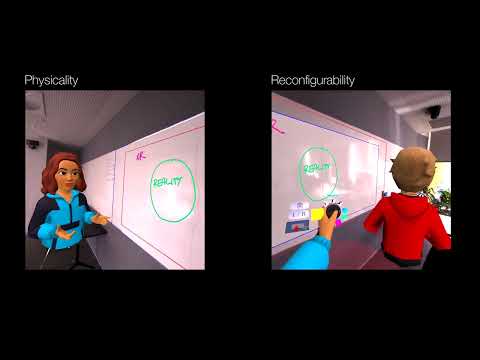
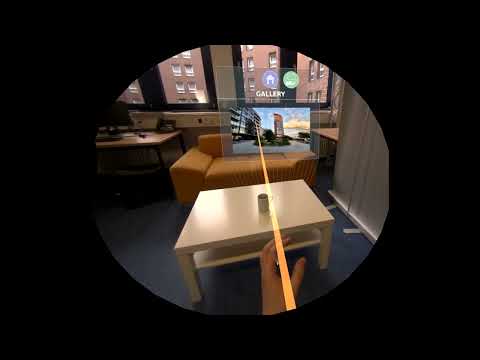
I study how people interact with computers — and how to make that interaction more natural, expressive, and powerful. My work sits at the intersection of input modalities, interface design, and human behavior, spanning devices from smartphones to AR/VR headsets and AI glasses.
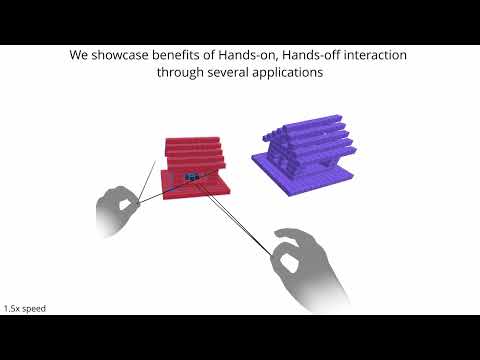
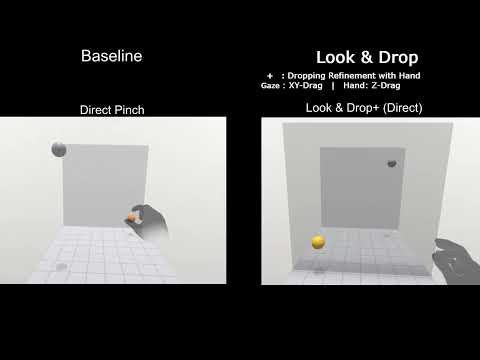
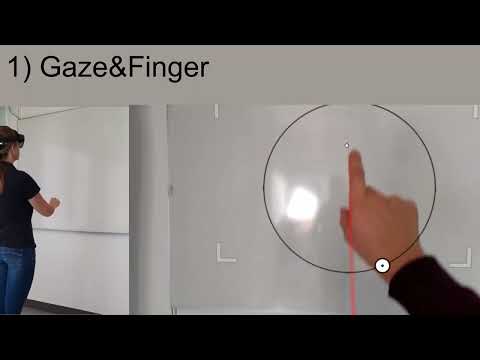
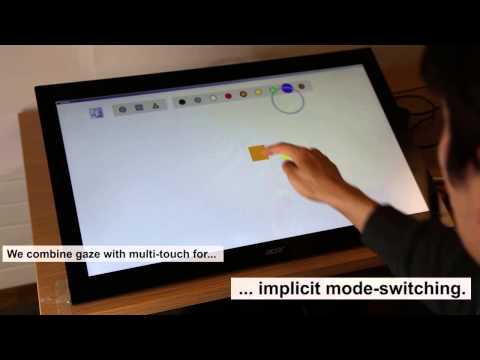
A central theme is Eye-Hand Symbiosis: combining gaze and hand input to unlock a fundamentally richer interaction space, where you act on any object you see from any hand position. This line of work, running since 2013, now underpins interaction paradigms in devices like Apple Vision Pro.
Across all areas, I work through prototyping explorations, empirical studies, and design space research — building working systems, running controlled experiments, and mapping out the space of possibilities to distill findings into design guidelines grounded in real human behavior.
Eye-Hand Symbiosis is an interaction paradigm where the eyes and hands form a symbiotic relationship in the user interface — enabling a novel way of human-computer interaction that extends beyond each individual modality, toward a plethora of novel interactive capabilities.
In the history of Human-Computer Interaction (HCI), major interfaces have been based on the coordination of eyes and hands, following a clear division of labour: hands provide commands via input devices, while eyes perceive the visual output on a screen. This has been a long-lasting paradigm transcending eras of computing — from command-line interfaces to desktop and mobile devices.
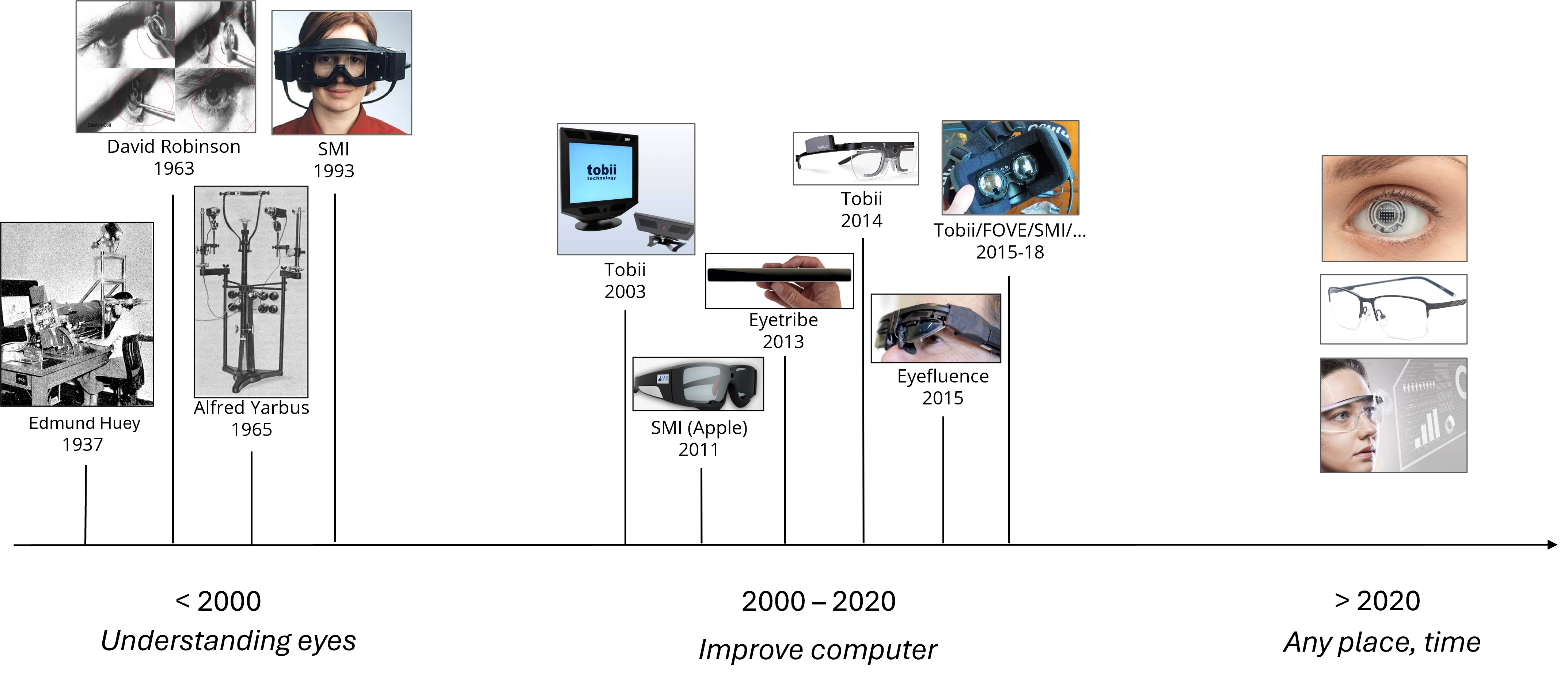
Eye-tracking technology is rapidly advancing, enabling increasingly usable, accurate, and secure sensing of gaze. Eye-tracked headsets, glasses, smartphones, and in principle any computing device are on the horizon.
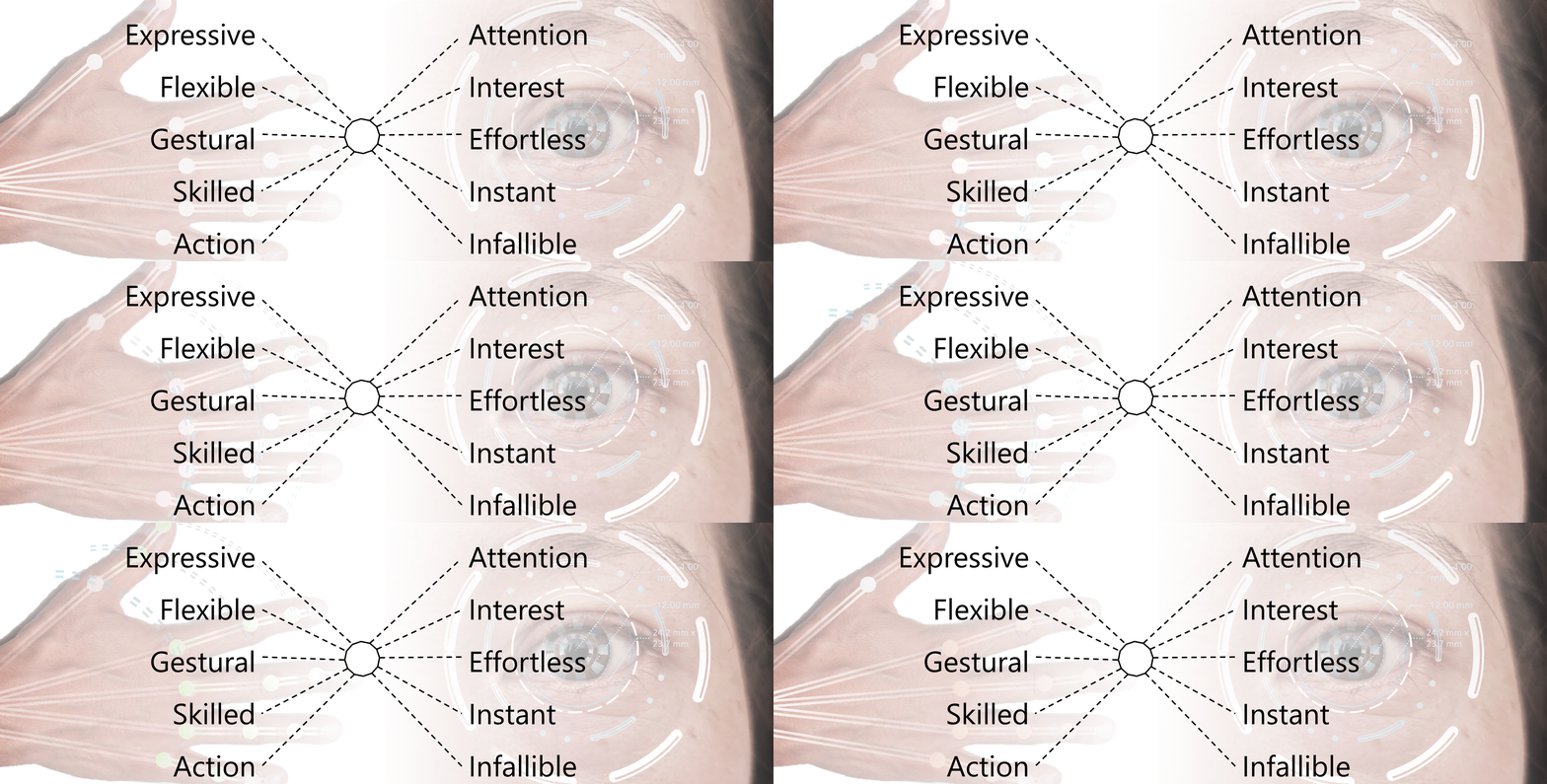
One of the most evolved relationships in our body exists between the eyes and hands. We can intuitively coordinate what we see with what we touch, hold, and manipulate. Our hands are highly expressive and flexible — capable of learning skill and gesture — while our eyes indicate intent, attention, and interest effortlessly and instantly. Both combined form the basis for powerful human abilities to experience and manipulate the world.
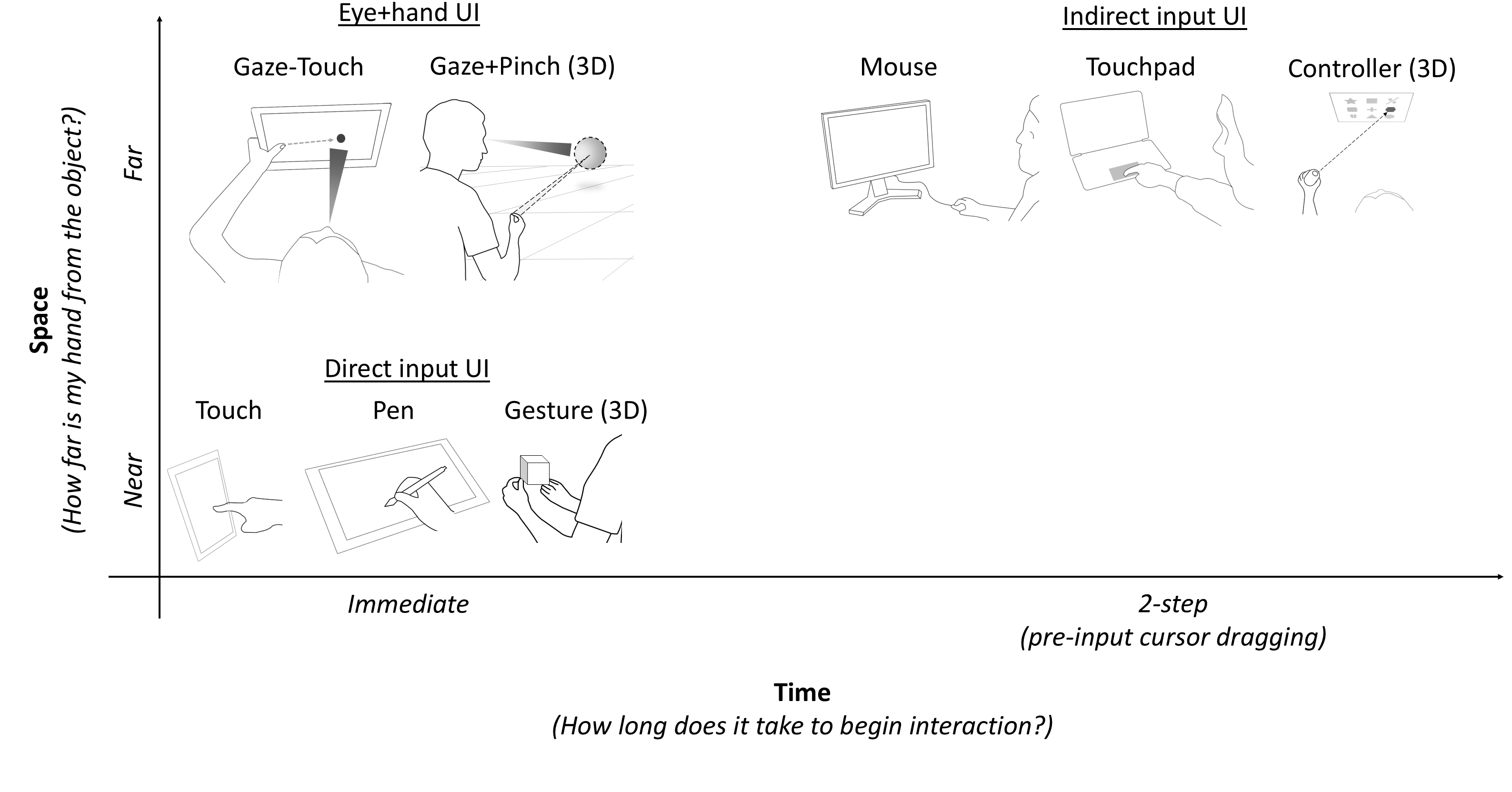
Hand-controlled input can be classified as direct or indirect. A mouse is indirect — the device mediates a cursor. A touchscreen is direct — input immediately acts on the object beneath the finger. This can be further decomposed using spatial and temporal indirection (Beaudouin-Lafon, CHI'00):
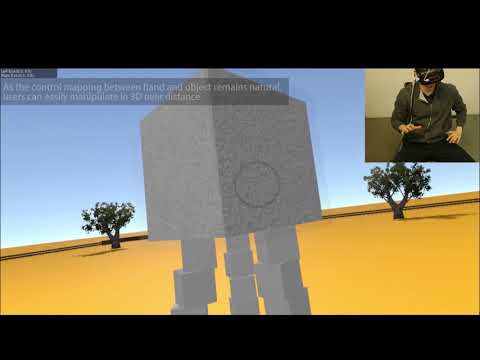
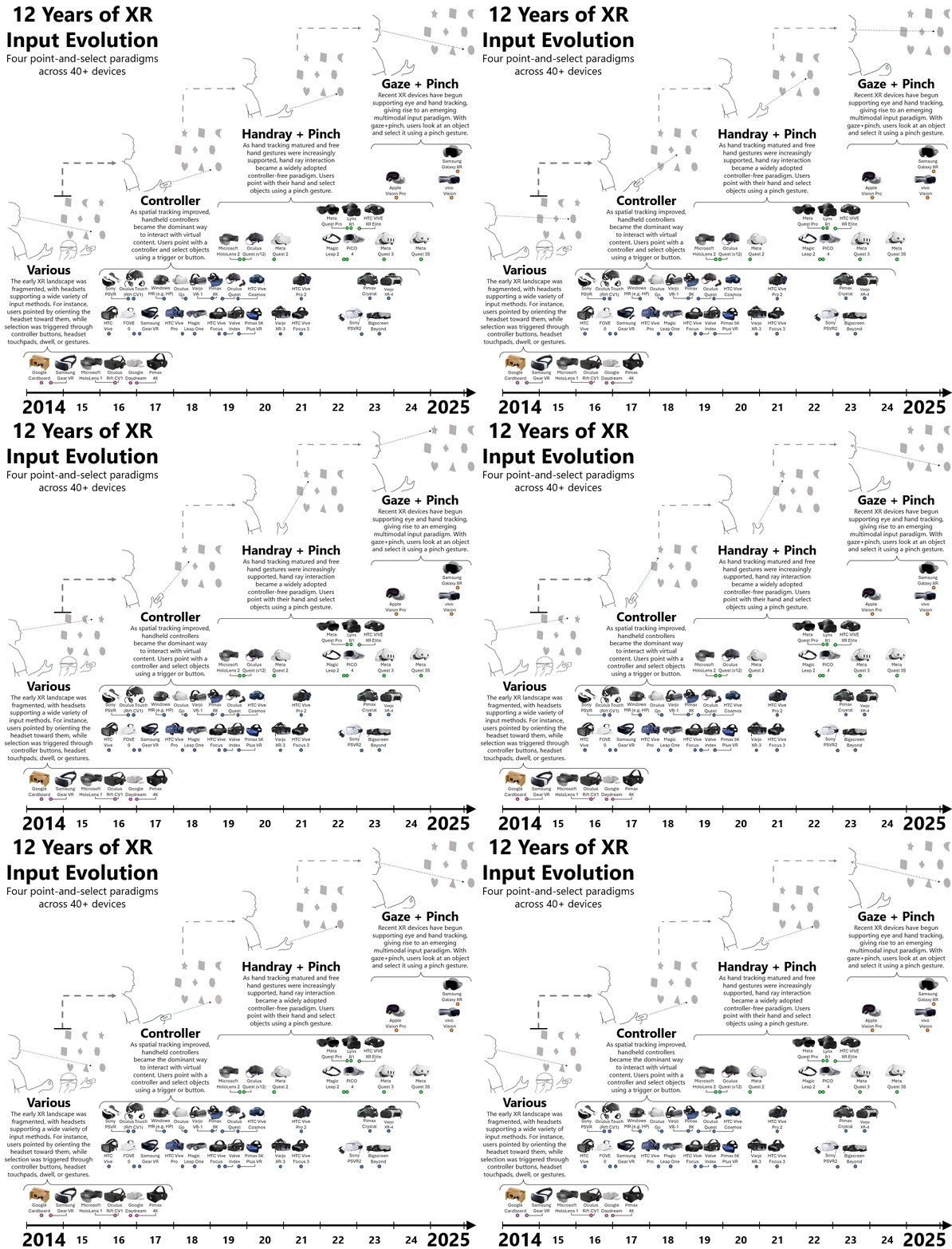
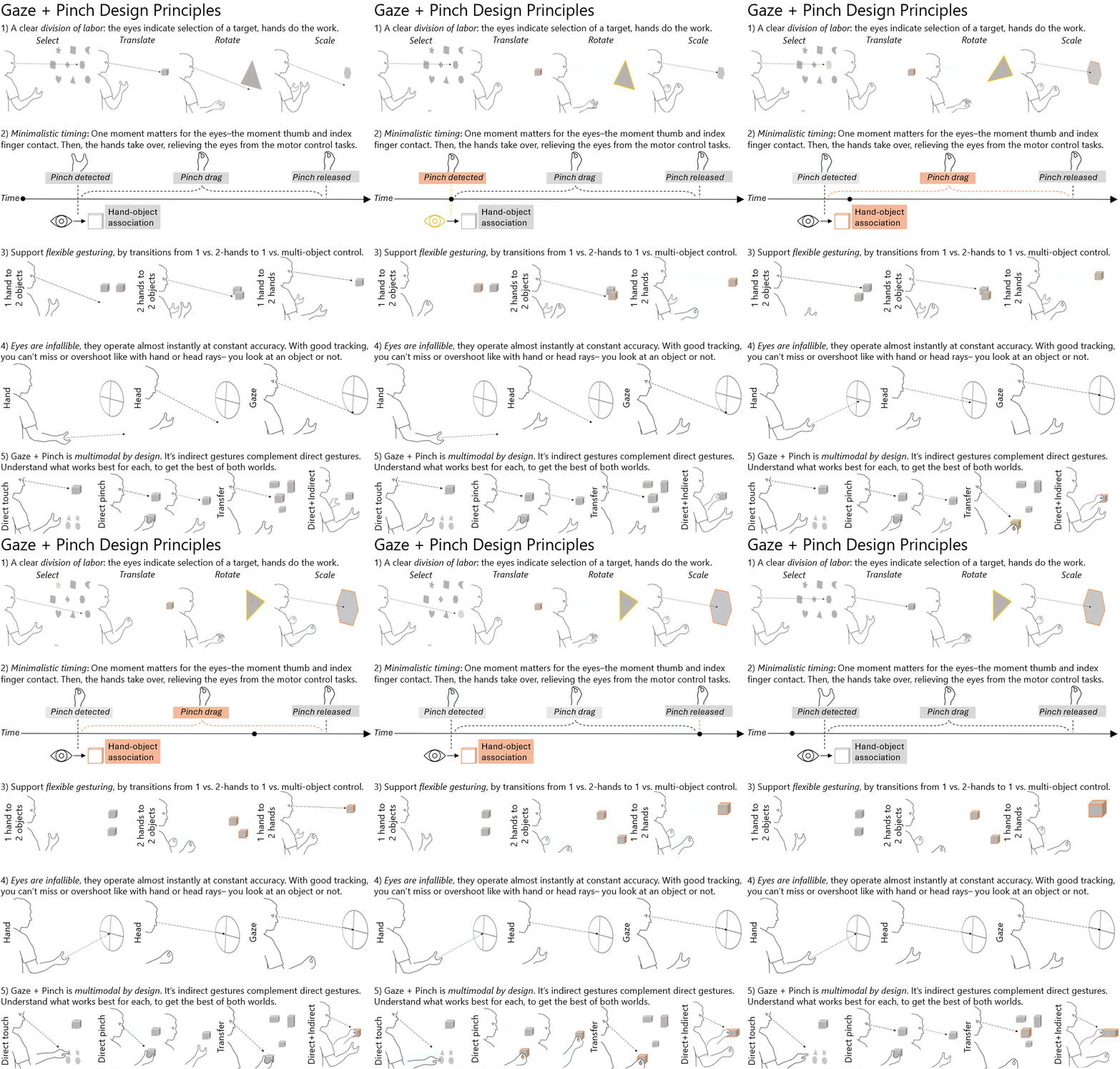
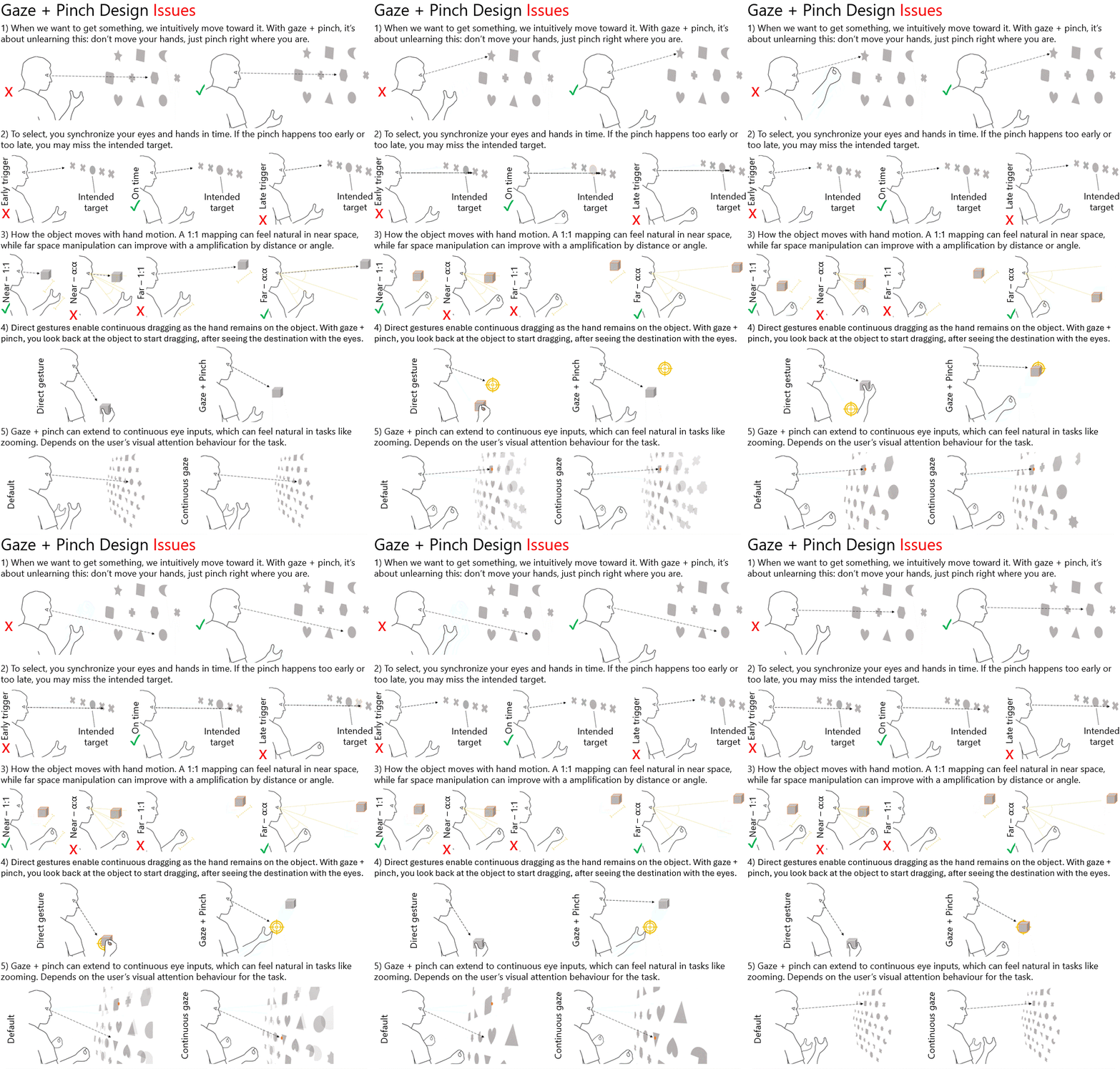
Eye+Hand UIs — such as Gaze-Touch, Gaze+Pen, or Gaze+Pinch (as in Apple Vision Pro) — are spatially indirect but temporally direct. You can interact as quickly as with direct input, yet reach any target regardless of distance.
Categorisation of input methods into degrees of spatial and temporal indirection (adopted and extended from Beaudouin-Lafon, CHI'00).
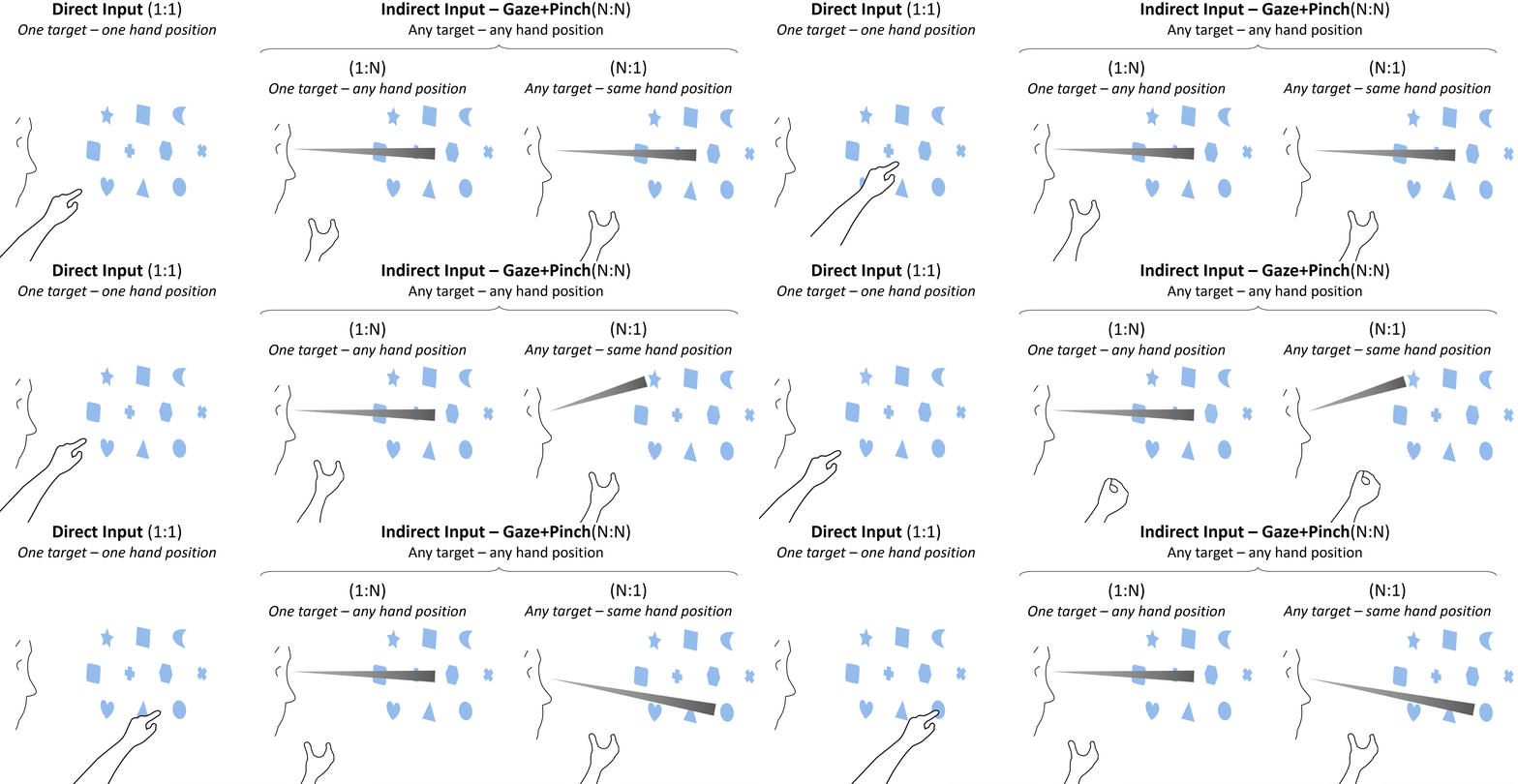
As described in my 2014 UIST paper, Eye-Hand Symbiosis represents an advance for potentially all manual interfaces. A fundamental aspect is an extension of the direct manipulation paradigm:
This decomposes into two powerful cases: 1:N — one target, any hand position (flexibility, two-handed mappings); and N:1 — any target, one hand position (reach any object at a glance, context-switching without moving the hand).
| 2025 | DFF Sapere Aude Research Leader |
| 2025 | ACM SIGCHI Special Recognition for Exemplary Industry-Academia Collaboration |
| 2023–24 | Best Paper Award Nomination — ACM CHI'24, SUI'23, SUI'24 |
| 2023 | Media coverage of CHI'23 paper in AppleInsider, ShiftDelete, TechTelegraph |
| 2018 | 5 Exceptional Review Awards — ACM CHI and UIST |
| 2017 | Media coverage of CHI'17 paper in MSFT, Windows Central, SlashGear · 40k+ YouTube views |
| 2016 | Invited Talk — UIST Reprise @ ACM SIGGRAPH 2016 |
| 2015 | Best Paper Award Nomination — ACM UIST 2015 (top 2%) |
| 2014 | Dean's Award for Excellence in PhD Studies — Lancaster University (top 1%, €500) |
Click a year to expand. Full list on Google Scholar.
Articles aimed at a broader audience — high-level overviews of research and reflections on the evolution of human-computer interaction.
A multidisciplinary group at Aarhus University studying how people interact with digital worlds through the synergy of body modalities — gaze, hand, finger, arm — and emerging computing platforms. Open to internships, thesis projects, and research collaborations.
Interested in HCI, XR, or eye-hand interaction research? I'm always open to conversations about collaborations, student projects, internships, or research stays.
Reach me at ken@cs.au.dk
Department of Computer Science
Aarhus University, Denmark